Your Car As Your Home Generator: How Tesla's Bidirectional Charging Works
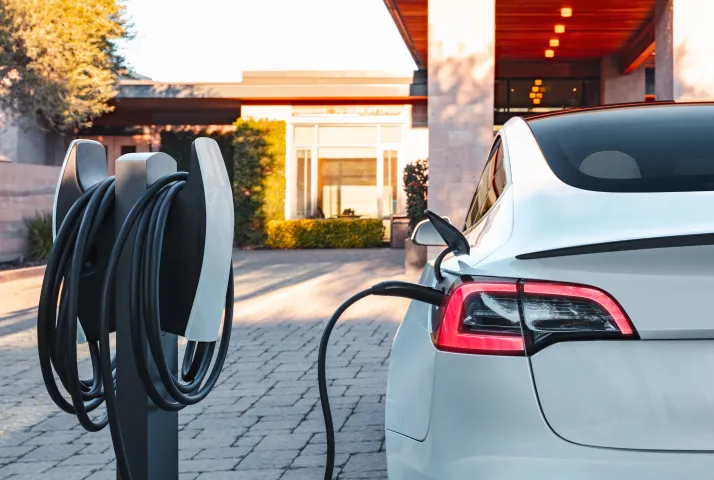
Imagine a Seattle windstorm knocks out your electricity. Instead of sitting in the dark, you plug in your Tesla and your car powers your house.
This is what Tesla’s Powershare bidirectional charging technology makes possible.
But not every Tesla supports it, and you’ll need the right equipment installed at home.
What Is Bidirectional Charging?
Normally, electricity flows from your house into your EV battery.
Bidirectional charging lets electricity flow the other way, too. Your Tesla becomes a massive backup battery, capable of powering lights, refrigerators, heating equipment, and other appliances during outages.
How Much Power Can Your Tesla Supply?
A standard Tesla Powerwall 3 stores 13.5 kilowatt-hours (kWh) of electricity. That’s enough to power an average American home for roughly 11 hours.
A Tesla Cybertruck stores approximately 123 kWh, or about nine times the battery capacity of a Powerwall!
That means a fully charged Cybertruck could theoretically power an average home for around four days, compared to roughly 11 hours for a single Powerwall 3.
Tesla estimates Cybertruck home backup can last over three days, depending on your household’s electricity consumption.
Which Teslas Support Powershare?
-
Cybertruck: Can provide home backup without a Powerwall.
-
Compatible Model 3 and Model Y: Can extend home backup when paired with a Powerwall 3.
-
Older Teslas: There are a few compatible models depending on production date. To check your car’s status, go to Software → Additional Vehicle Information → Powershare Support on your Tesla’s touch screen.
What Equipment Do You Need?
You can’t simply connect your Tesla to an ordinary outlet to power your home.
Depending on your setup, you’ll need a compatible Tesla Wall Connector, a Powershare Gateway or Powerwall system, and professionally installed electrical connections.
Is Your Seattle Home Ready?
At Volt Lab Electric, we specialize in residential EV charging and electrical upgrades throughout the greater Seattle area and King County.
Interested in powering your home with your Tesla? Contact us by clicking below to discuss your home’s electrical setup and installation options.
Ready For Our Help In Repairing, Upgrading, or Renovating Your Home?
Other Shockingly Good Blog Posts:

Do You Really Need Every Electrical Permit They Say You Do?

If Your Seattle Home Was Built Pre-1970, Here’s What To Look Out For